Kakikoufu Japanese Traditional Medicine Education

Experience, Learn, and
Deepen Your Practice

Japanese traditional medicine developed from medical knowledge, philosophies, and techniques introduced from China and the Korean Peninsula, evolving over centuries in Japan’s own cultural environment and clinical traditions. Kampo herbal medicine, acupuncture, moxibustion, anma and other manual therapies, food-based wellness practices, and qigong and daoyin offer different ways of understanding and caring for the body.
At Kakikofu, we study and practice these approaches in the context of their history, concepts of the body, diagnostic methods, and approaches to daily self-care.

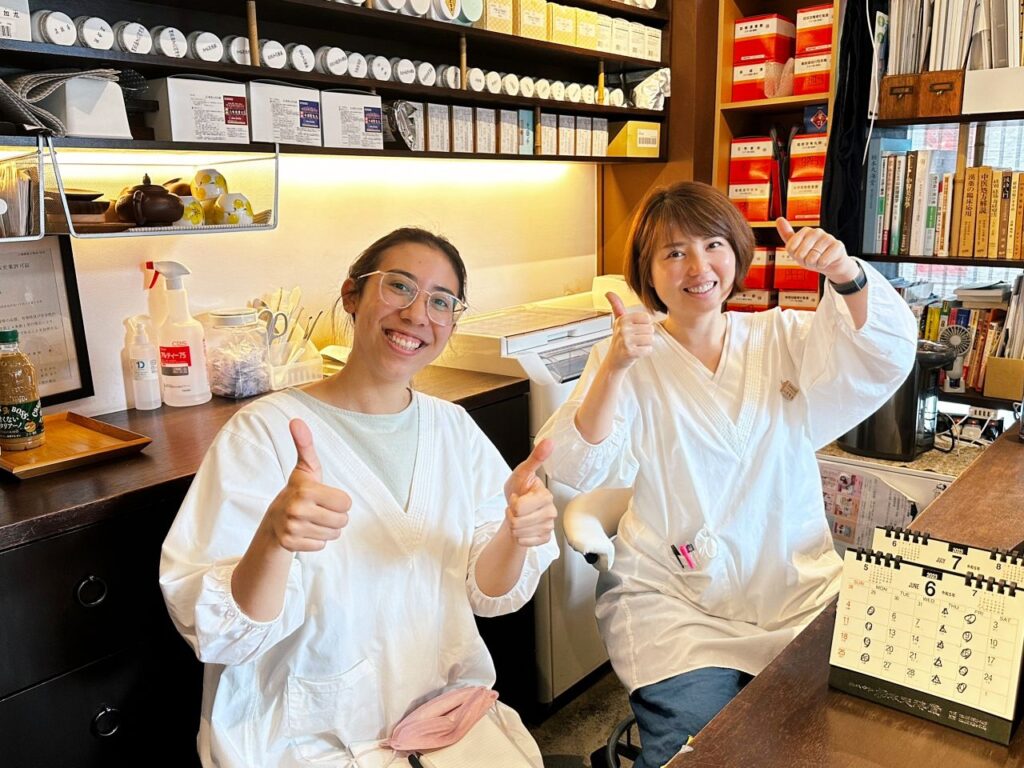
Kaori teaches Kampo, yakuzen (traditional food-based wellness), and dietary practices. Hiroshi teaches Japanese acupuncture and moxibustion, manual therapy, Eastern philosophy, qigong, and body mechanics informed by his long experience in martial arts.

Our programs are designed for different goals, from first-time visitors to experienced practitioners.

壱

One-Day Course

Hands-on Experiences for Visitors and Beginners

These introductory experiences are intended for travelers and anyone interested in Japanese traditional culture, self-care, and wellness.
No prior training is required.

弐

Basic Skills Course

Experience Fundamental Techniques and Begin Practicing

These practical introductory classes are intended for acupuncture students and practitioners who have studied acupuncture or TCM overseas and wish to explore Japanese methods.

参

Clinical Application Course

Advanced Training for Healthcare Professionals
Refine the Skills You Already Have.
Start by Refining Your Own Body.

Acupuncturists, manual therapists, physiotherapists, and other healthcare professionals use a wide range of techniques. Yet whatever the technique, it is the practitioner’s own body that performs it.

肆

Student Observation Program

Learn by Observing Daily Clinical Practice and Asking Questions
This observation program is intended for students of Japanese traditional medicine, Kampo, acupuncture, yakuzen, and related subjects. Participants can observe routine consultations and clinical work and discuss approaches used in practice.
伍

International Education

Kakikofu also provides continuing education for practitioners outside Japan.
Italy

Our teaching draws on Japanese manual therapies, anpuku (abdominal therapy), qigong, daoyin, and body mechanics informed by martial arts. We focus on posture, movement, releasing unnecessary tension, balance, and how the practitioner’s own body use affects touch and treatment.

Poland

We provide in-person instruction in Japan and continuing online education in Japanese acupuncture, moxibustion, and manual therapy. Kampo medicine, herbal traditions, and yakuzen are also among the learning themes as we support opportunities for sustained study of Japanese traditional medicine.

陸

Coming Soon!

Digital Learning

Planned topics
  • History of Japanese traditional medicine
  • Foundations of East Asian medical theory
  • Introduction to Kampo medicine
  • Foundations of Japanese acupuncture and moxibustion
  • Meridians and acupoints: basic concepts and applications
  • Yakuzen and dietary self-care
  • Eastern philosophy and traditional approaches to the body and wellness

Our aim is to make it possible to study the theoretical foundations independently and repeatedly, leaving more time for practical skills and clinical applications during in-person training. Materials will be released as they are completed.

From Experience to Learning—and Into Practice

People come to Japanese traditional medicine with different interests and goals.

You might experience moxibustion or yakuzen tea, study history and theory at your own pace, practice fundamental acupuncture skills, deepen your clinical abilities as a professional, or observe the daily work of a clinic.

At Kakikofu, we value learning that suits each person’s purpose and experience.

Tradition is not simply about preserving knowledge from the past unchanged. To us, it also means studying inherited knowledge and techniques, applying them in practice, comparing them with experience, and passing them on to the next generation.

Booking and Practical Information

All in-person lessons and training sessions require advance booking. Fees are per person and include tax.

Our regular clinical consultations and treatments take priority, so requested dates may not always be available. Depending on scheduling and course content, sessions may also be possible on days when the clinic is normally closed. Please contact us in advance.

Lessons are generally conducted in English. However, neither of us is fluent in English, and we appreciate your understanding.

壱

One-Day Course

Hands-on Experiences for Visitors and Beginners

These introductory experiences are intended for travelers and anyone interested in Japanese traditional culture, self-care, and wellness.
No prior training is required.

Japanese Moxibustion Experience

Learn about Japanese moxibustion, make moxa, and experience self-care

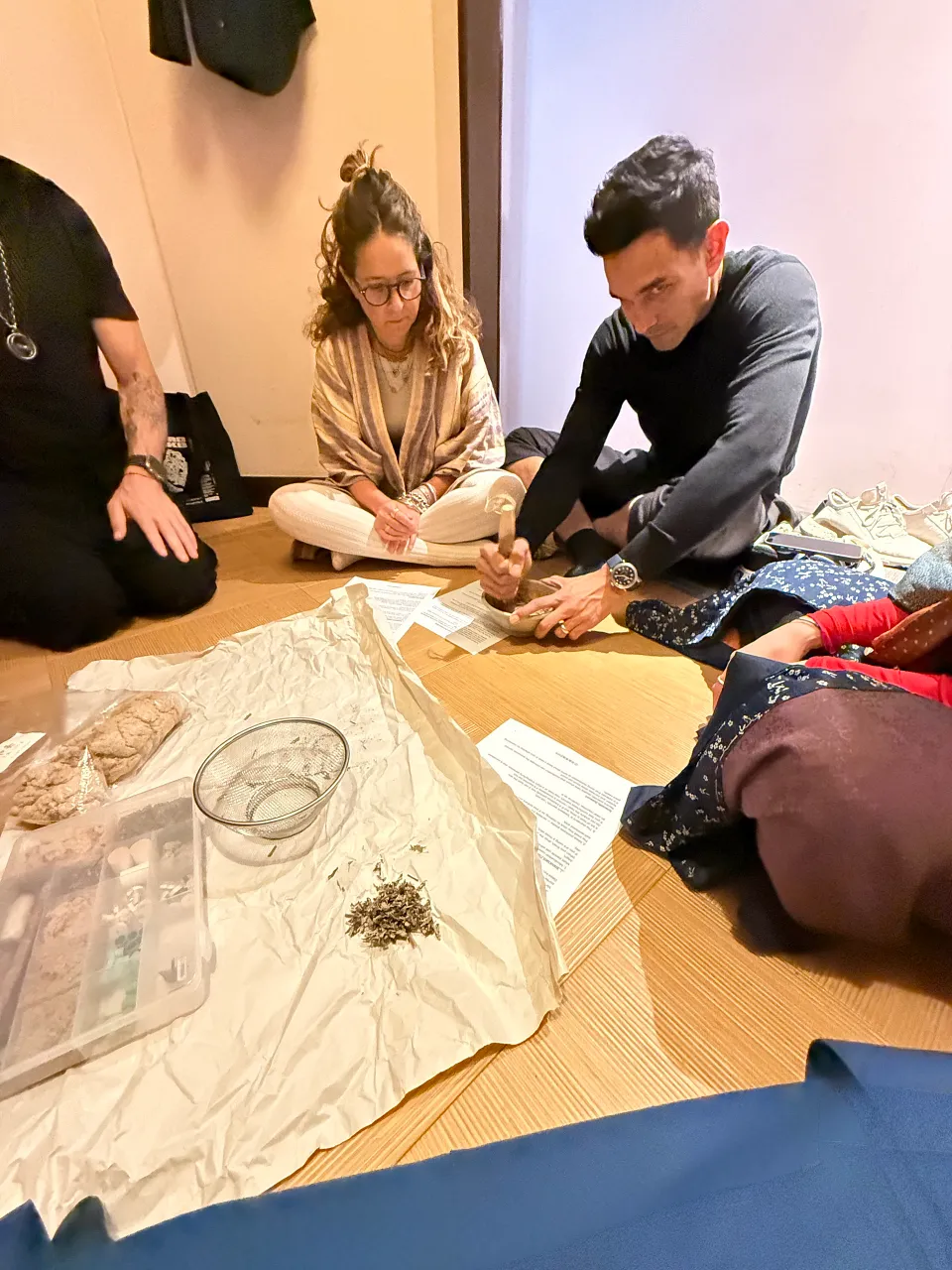
Discover a traditional Japanese approach to self-care through hands-on activities. Make moxa from dried mugwort, learn about the history and basic ideas behind moxibustion, and explore safe ways to use it for personal wellness.

What you will experience

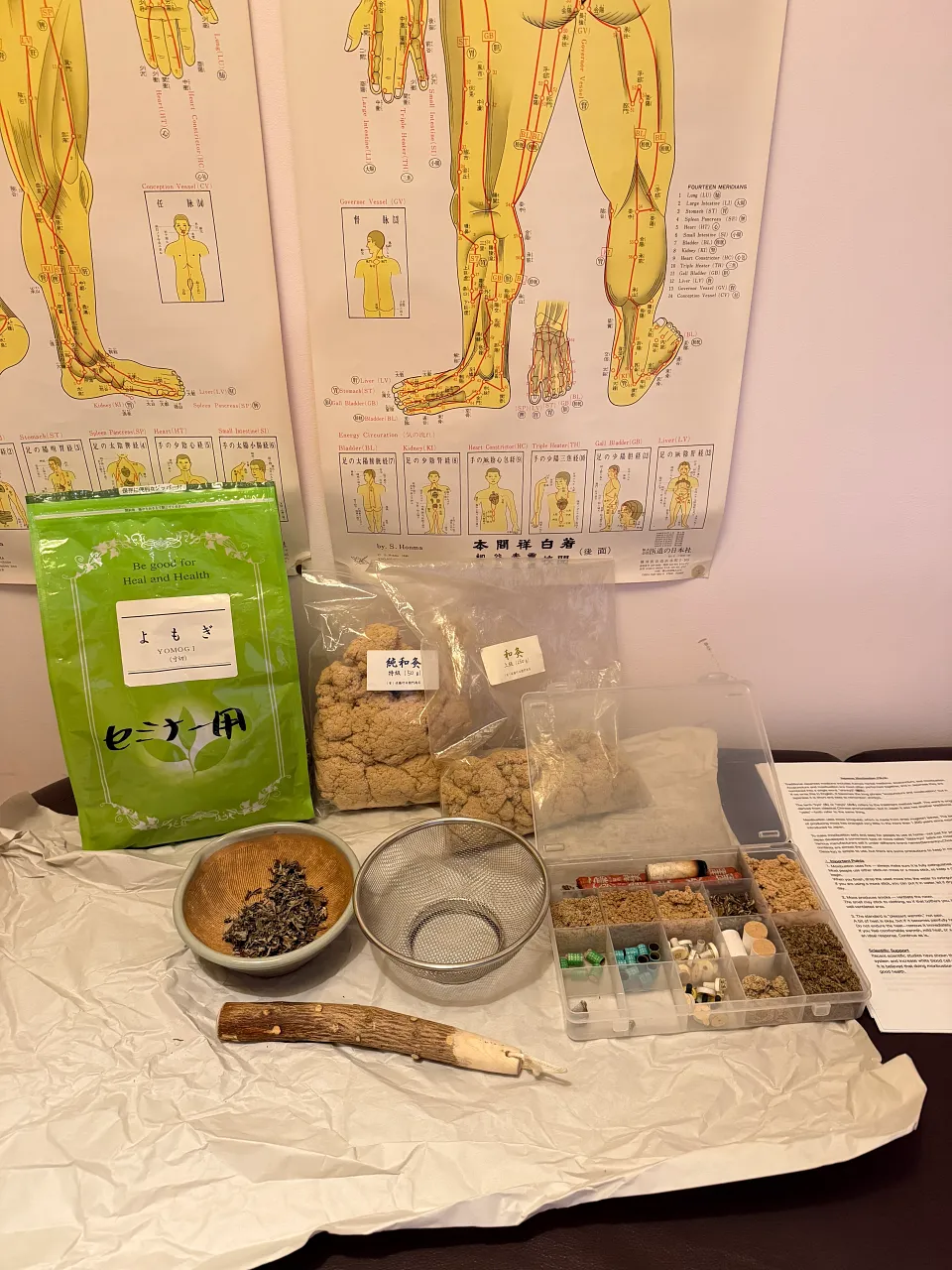
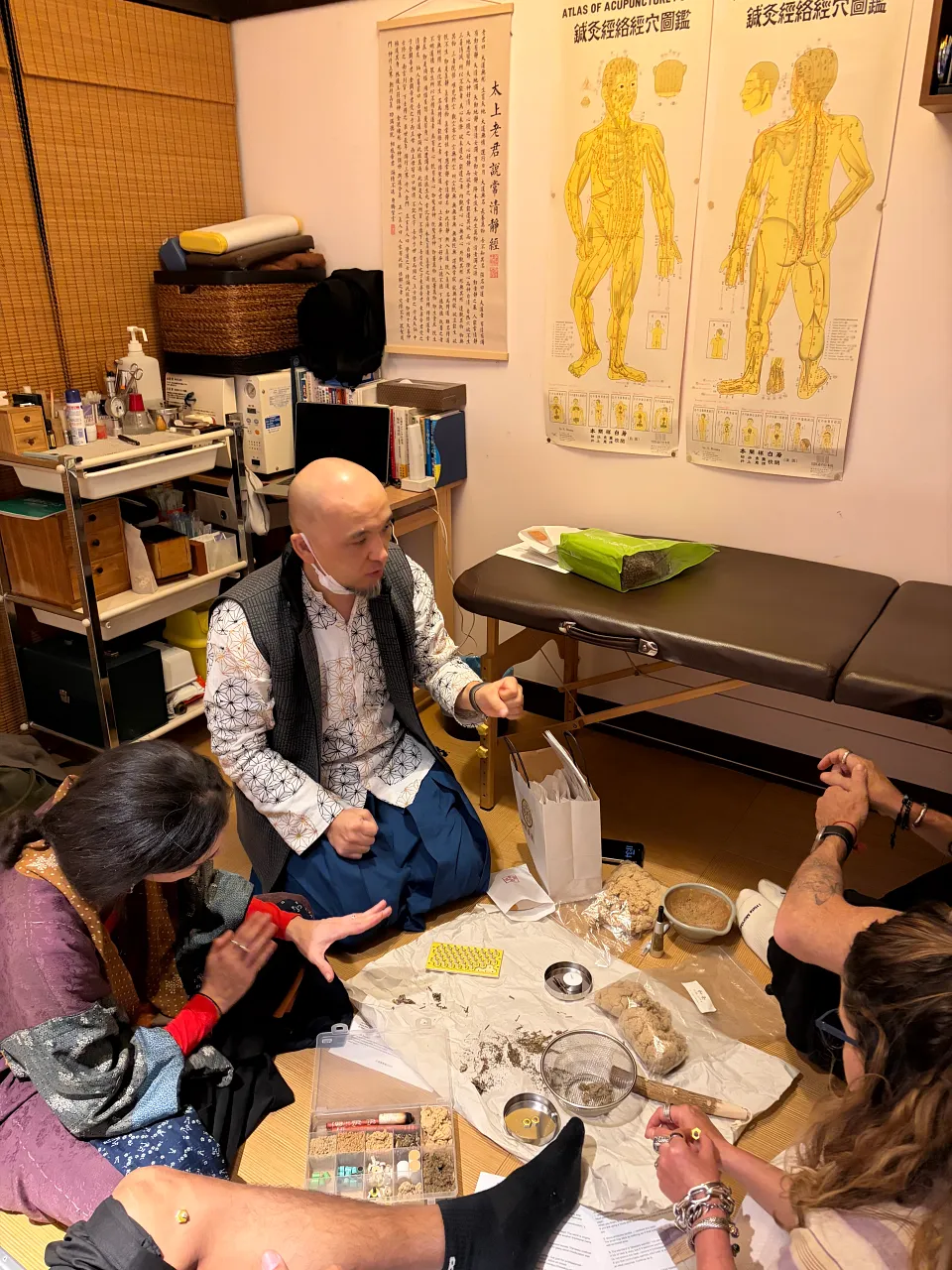
  • Making moxa from mugwort
  • An introduction to Japanese moxibustion and its history
  • Finding commonly used self-care points
  • Home-use methods and safety precautions
  • Taking home the moxa you have made

This is an introductory cultural and self-care experience. It does not include professional acupuncture or clinical technique training.


Duration:  Approx. 60 minutes

Fee : ¥11,000 per person (tax and materials included)

Group size : 1–4 participants

Instructor : Hiroshi

Yakuzen Tea Lesson

Discover the Ideas of Kampo Medicine and Create Your Own Personalized Yakuzen Tea

Yakuzen is a traditional approach to dietary self-care informed by East Asian medicine, including the seasons, individual constitution, and the characteristics of ingredients. The phrase “more than everyday food, less than medicine” is a metaphor for this approach, not a medical or legal classification.

Learn introductory ideas such as qi, blood, body fluids, and patterns of heat and cold. Then combine familiar ingredients and plants to create and taste your own yakuzen tea.

What you will experience

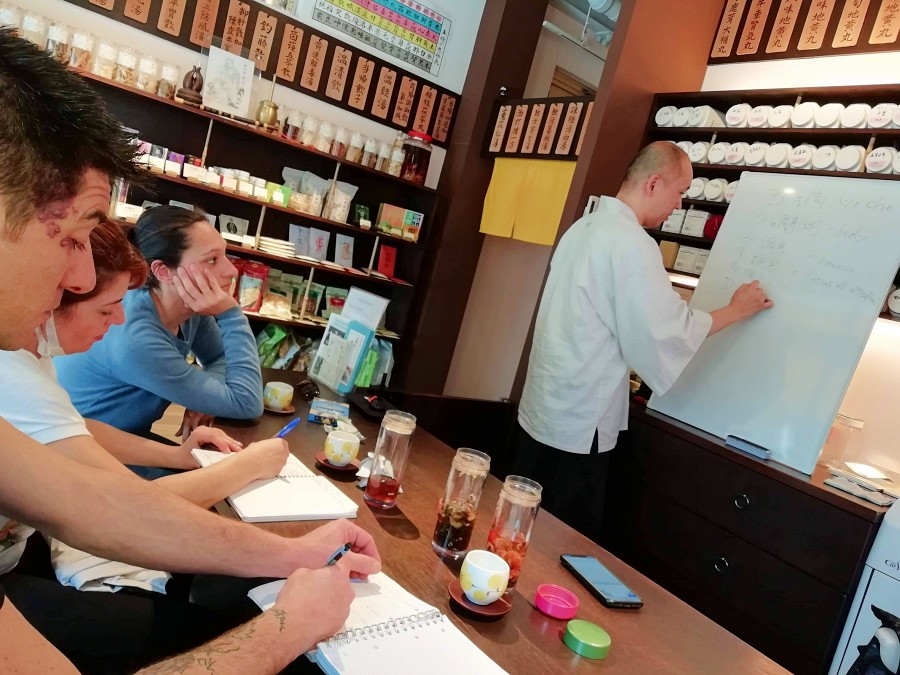
  • Basic ideas of Kampo medicine and yakuzen
  • An introduction to constitution and seasonal care
  • Characteristics of ingredients and plants used in yakuzen tea
  • Blending, preparing, and tasting your tea
  • Ideas for incorporating dietary self-care into daily life

This lesson does not provide professional training in herbal prescribing, crude-drug pharmacology, or clinical techniques.


Duration:  Approx. 90 minutes

Fee : ¥16,500 per person (tax and materials included)

Group size : 1–4 participants

Instructor : Kaori

弐

Basic Skills Course

Experience Fundamental Techniques and Begin Practicing

These practical introductory classes are intended for acupuncture students and practitioners who have studied acupuncture or TCM overseas and wish to explore Japanese methods.
A single session is not enough to master a technique. The aim is to understand the fundamentals, experience them firsthand, and establish a starting point for continued independent practice. General visitors should consider our One-Day Course.

Japanese Acupuncture — Basic Skills Course

Learn about the characteristics of Japanese acupuncture and practice basic needle handling, with particular emphasis on the guide-tube method (kanshin-ho).
Possible topics
  • Characteristics of Japanese acupuncture and handling needles and guide tubes
  • Fundamentals of oshide (supporting hand) and sashide (needling hand)
  • Basic operations of the guide-tube method
  • Practice using training pads

Duration:  Approx. 90 minutes

Fee : ¥16,500 per person (tax and materials included)

Group size : 1–4 participants

Instructor : Hiroshi

Japanese Moxibustion — Basic Skills Course

Learn fundamental techniques of Japanese moxibustion, including forming small moxa cones and lighting them with incense.
Possible topics
  • Characteristics of Japanese moxibustion
  • Types and properties of moxa
  • Making moxa cones and adjusting their size and shape
  • Basic techniques for lighting moxa with incense
  • Practice on training pads and methods for continued practice

Duration:  Approx. 90 minutes

Fee : ¥16,500 per person (tax and materials included)

Group size : 1–4 participants

Instructor : Hiroshi

The acupuncture and moxibustion classes are separate.
Both focus on fundamental techniques using training pads;
they do not involve treating patients or mastering advanced clinical applications.
参

Clinical Application Course

Advanced Training for Healthcare Professionals
Refine the Skills You Already Have. Start by Refining Your Own Body.

Acupuncturists, manual therapists, physiotherapists, and other healthcare professionals use a wide range of techniques. Yet whatever the technique, it is the practitioner’s own body that performs it.

Even when applying the same technique, posture, center of gravity, breathing, release of unnecessary tension, coordinated movement, and quality of touch can change the stimulation transmitted to the patient.

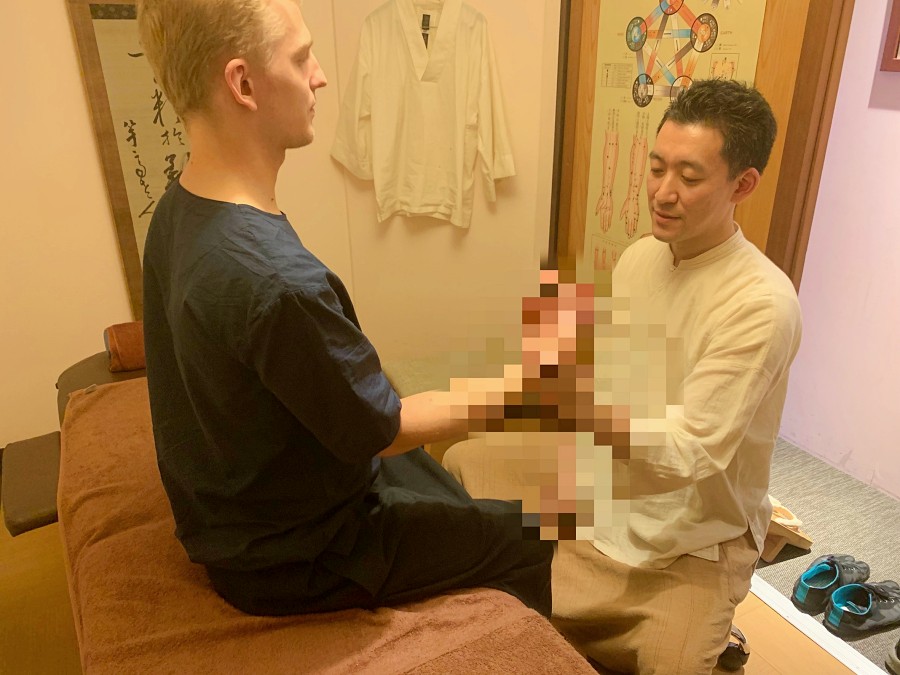
Drawing on many years of martial arts training, Hiroshi has continued to study and refine ways of applying body mechanics and sensitivity to acupuncture and manual therapy.

He also emphasizes clinical judgment: how to observe the patient’s body, how to make contact, and how much stimulation to apply.

Rather than accumulating numerous new techniques, this course aims to help you use the knowledge and skills you already possess more appropriately and with greater precision.

Possible topics
  • Clinical applications of Japanese acupuncture and moxibustion
  • Contact needling and other non-insertive techniques
  • Palpation and observation of the body
  • Clinical applications of Japanese moxibustion
  • Manual therapies practiced at Kakikofu
  • Posture, balance, relaxation, and coordinated movement
  • Quality of touch and transmission of force
  • The practitioner’s own body mechanics
  • Case discussions and questions

The course welcomes acupuncturists, physicians, physiotherapists, manual therapists, and other professionals with relevant foundational knowledge and practical skills. Training is adapted to each participant’s background, experience, and learning objectives.

You do not need to abandon the techniques you already know. This course is about learning to use them even better.
Prerequisites

Completion of the Basic Skills Course is not required. Practitioners with sufficient foundational knowledge and practical experience in their own field may enroll directly.


Duration:  Approx. 120 minutes

Fee : ¥36,300 per person (tax and materials included)

Group size : 1–4 participants

Instructor : Hiroshi

Longer training sessions may be arranged individually.

Professional classes on Kampo herbal medicines and crude drugs are currently suspended.
肆

Student Observation Program

Learn by Observing Daily Clinical Practice and Asking Questions

This observation program is intended for students of Japanese traditional medicine, Kampo, acupuncture, yakuzen, and related subjects. Participants can observe routine consultations and clinical work and discuss approaches used in practice.

Possible topics
  • Observation of regular clinical activities
  • Questions and answers about Kampo, acupuncture, and yakuzen
  • Discussion of traditional medicine in Japan and overseas
  • Explanations of clinical thinking and daily practice

We have previously welcomed students from Korea, Australia, the United States, and Poland. Activities depend on participants’ fields of study and interests, as well as the clinic’s schedule on the day.

Observation of patient consultations or treatments is permitted only with the patient’s explicit consent. Patient privacy and clinical care always take priority.


Duration:  10:00–13:00 (approx. 3 hours)

Special student fee : ¥11,000 per person per day (tax included)

Group size : 1–4 participants

The student rate differs from our standard course pricing.
The program is for observation and questions;
it does not include hands-on instruction in acupuncture or manual therapy.

Intern student activity report

Impressions and recommendations after training

The reproduction, duplication,
or alteration of any information on
this site is strictly prohibited.
漢方薬店と鍼灸院が一緒になった東京都自由が丘駅の鍼灸 スポーツ鍼院、漢方鍼灸 和氣香風